

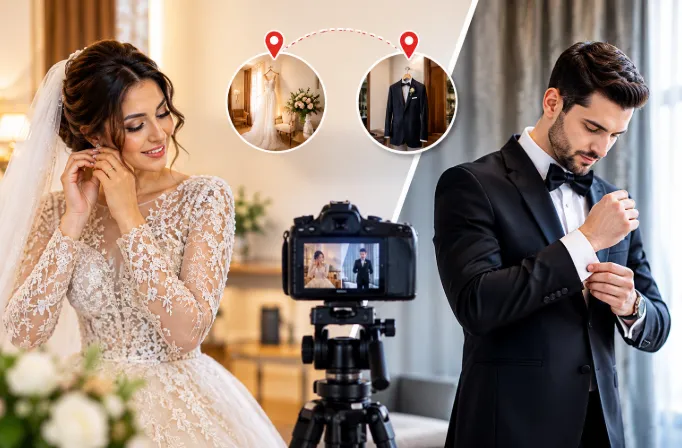
Your wedding morning is one of the most emotional parts of the entire celebration. It is the last quiet chapter before you become newlyweds, filled with excitement, nervous laughter, family hugs, and small moments that often become your favourite memories later.
But when the bride and groom get ready at different locations, planning wedding photography becomes much more complicated.
Perhaps the bride is getting ready at her parents' home while the groom is staying in a nearby hotel. Maybe both families booked different hotels, or you live in different cities and want to spend the morning with your own families.
Whatever the reason, separate getting-ready locations create one major challenge:
How do you capture both stories without missing important moments?
A photographer cannot be in two places at the same time. If the groom is putting on his jacket while the bride's mother is fastening her wedding dress, one photographer has to choose.
Fortunately, this problem is completely manageable when you plan ahead.
Instead of treating the bride's preparation and the groom's preparation as two unrelated events, think of them as two parallel stories that eventually come together.
This guide explains exactly how to plan wedding photos when the bride and groom get ready at different locations, including:
- Whether one photographer is enough
- When a second photographer is worth booking
- How to build a realistic wedding photography timeline
- How to avoid losing time while travelling
- How to organise accessories and family photos
- What to do if one partner finishes early
- How to coordinate photography and videography
- Backup plans for weather, delays, and unexpected problems
By the end, you'll have a complete wedding morning photography plan that helps both partners enjoy the experience instead of worrying about logistics.
Why Separate Getting-Ready Locations Need a Different Photography Strategy
Wedding photography becomes more complicated when the couple prepares separately because the photographer is no longer documenting one location—they're documenting two independent timelines.
Each location has its own:
- family members
- lighting conditions
- preparation schedule
- emotional moments
- travel requirements
The goal isn't to photograph every single second.
The goal is to make sure the moments you'll treasure years later aren't accidentally missed.
Think of the Morning as Two Connected Stories
Many couples unintentionally plan only the bride's photography.
The groom's preparation becomes something like:
"Take a few photos of the suit."
That usually leads to rushed coverage.
Instead, give both preparation locations equal planning attention.
Ask yourself:
- Which moments are impossible to recreate?
- Which family reactions matter most?
- Which portraits are essential?
- Which photographs can happen later?
Creating these priorities early makes every later decision easier.
Share Both Addresses as Soon as You Book the Photographer
Your photographer should know:
- Bride's address
- Groom's address
- Ceremony venue
- Reception venue
- Parking information
- Building access
- Expected departure times
Small details matter.
A photographer can lose ten minutes simply finding the correct hotel entrance.
Those minutes often come directly from portrait time.
Should You Hire One Photographer or Two?
This is usually the first question couples ask.
The answer depends less on budget and more on timing.
When One Photographer Works Well
One photographer is often enough when:
- both locations are close together
- preparation times don't overlap
- the groom's schedule is flexible
- the ceremony starts later in the day
For example:
- Photographer covers the groom first.
- Travels to the bride.
- Captures the bride's final preparation.
- Everyone leaves comfortably.
This can work surprisingly well.
The key is making sure the important moments happen while the photographer is present.
When Two Photographers Are Worth It
A second photographer becomes valuable when:
- locations are far apart
- both families have important traditions
- both partners want complete preparation coverage
- emotional moments happen simultaneously
One photographer can capture:
- bride getting dressed
while the second captures:
- groom's father helping with his tie.
Those moments happen naturally instead of being recreated later.
Is a Second Photographer Better Than More Hours?
Many couples assume buying extra photography hours solves everything.
It doesn't.
More hours still don't let one photographer be in two places simultaneously.
If simultaneous coverage is your priority, a second photographer usually provides more value than simply extending the package.
Decide Which Location the Photographer Should Visit First
If you're using one photographer, deciding where they begin is extremely important.
There's no universal rule.
Instead, choose based on where the earliest meaningful moments happen.
Visit the Groom First When His Schedule Is Flexible
A typical groom's preparation often includes:
- suit
- shoes
- watch
- cufflinks
- jacket
- portraits
Many of these can happen earlier without affecting the ceremony.
Example:
| Time | Activity |
| 12:00 | Groom photography begins |
| 12:40 | Groom portraits |
| 12:50 | Photographer leaves |
| 1:20 | Bride photography begins |
This works well if the bride's dress ceremony happens later.
Visit the Bride First When Her Timeline Is Fixed
Sometimes the bride has:
- family blessings
- cultural dressing traditions
- emotional first looks with parents
These shouldn't be rushed simply because the photographer started elsewhere.
Always protect moments that cannot naturally happen twice.
Build Your Photography Timeline Backward From the Ceremony
Instead of asking:
"When should the photographer arrive?"
Start with:
"When does the ceremony begin?"
Everything else should work backward from that.
Example Timeline
Assume:
Ceremony: 4:00 PM
| Time | Activity |
| 11:30 | Groom photography |
| 1:15 | Bride photography |
| 2:45 | Travel |
| 3:15 | First look |
| 3:40 | Couple portraits |
| 4:00 | Ceremony |
This protects the ceremony while leaving room for portraits.
Give Hair and Makeup Their Own Timeline
Hair and makeup often create unexpected delays.
Instead of estimating:
"About an hour."
Ask your beauty team for actual finishing times.
Then schedule photography around those times—not guesses.
Calculate Travel Time Properly
One of the biggest wedding photography mistakes is using Google Maps driving time as the entire travel allowance.
Real travel includes:
- packing equipment
- elevators
- parking
- security desks
- finding rooms
- unloading gear
A "20-minute drive" may actually require 40 minutes.
Check Traffic at the Actual Wedding Time
Morning traffic and afternoon traffic can be completely different.
Check the route during the same time your photographer will travel.
Also consider:
- road construction
- sporting events
- hotel entrances
- valet delays
A small buffer protects the rest of your schedule.
Create Separate Shot Lists
Separate preparation locations deserve separate shot lists.
Bride's Shot List
Details:
- dress
- shoes
- jewellery
- perfume
- bouquet
- invitation
- veil
Moments:
- makeup
- hair
- mother helping
- bridesmaids laughing
- putting on shoes
- veil placement
Portraits:
- bride alone
- with parents
- siblings
- bridesmaids
Groom's Shot List
Details:
- suit
- shoes
- watch
- tie
- cufflinks
- boutonniere
Moments:
- putting on jacket
- adjusting tie
- best man helping
- father assisting
Portraits:
- groom alone
- with parents
- groomsmen
- siblings
A written shot list prevents forgotten moments.
Organise Wedding Accessories Before Photography Begins
Accessories cause more wedding morning delays than most couples expect.
Create Two Accessory Stations
Instead of searching multiple bags, create one organised area at each location.
Bride's station:
- jewellery
- shoes
- veil
- perfume
- bouquet
- invitation
Groom's station:
- watch
- cufflinks
- tie
- shoes
- belt
- boutonniere
The photographer can begin immediately.
Decide Who Carries Shared Items
Wedding rings deserve special planning.
Decide:
- Who keeps them?
- When are they photographed?
- When are they transported?
Never leave valuable jewellery unattended simply for photographs.
Prepare Both Getting-Ready Rooms for Better Photos
You don't need luxury suites.
You need good conditions.
Prioritise Natural Light
Large windows create soft flattering portraits.
If possible, choose rooms with:
- clean walls
- uncluttered backgrounds
- enough floor space
- attractive mirrors
Remove Clutter
Move:
- shopping bags
- luggage
- food containers
- extra clothing
The cleaner the room, the better the photographs.
Send Room Photos Before the Wedding
A surprisingly helpful trick:
Send your photographer photos of both rooms beforehand.
They'll immediately identify:
- best window
- portrait corner
- lighting challenges
This saves valuable time.
Coordinating Photography and Videography at Two Locations
Photo and video teams need coordination.
Otherwise they compete for the same moment.
Share One Timeline
Give everyone the same schedule.
Include:
- arrival times
- departure times
- important family moments
- travel plans
- ceremony timing
Everyone should know exactly where they're supposed to be.
Identify Moments That Need Both Photo and Video
Examples:
- dress fastening
- tie adjustment
- gift exchange
- first look
- family reactions
Plan positions beforehand.
Don't recreate genuine moments repeatedly for different cameras.
Planning Wedding Photography in Separate Hotel Rooms
Many couples prepare in different hotel rooms.
This sounds easy—but hotel layouts can create unexpected challenges.
Request Similar Room Conditions
Ask the hotel for rooms with:
- large windows
- enough space
- similar layouts
- nearby locations
Even rooms on the same floor can photograph differently.
Prepare Rooms Before Housekeeping Leaves
Ask housekeeping to finish before photography begins.
A freshly prepared room creates cleaner backgrounds.
What If the Bride and Groom Start Getting Ready at Different Times?
This is actually very common.
The bride's preparation often takes longer.
Instead of matching schedules, match photography to important moments.
Example:
Bride:
- makeup
- hair
- dress
Groom:
- final dressing
- portraits
- family photos
The schedules don't need to be identical.
They simply need to connect smoothly.
What If One Partner Is Ready Much Earlier?
Don't waste that time.
Instead:
- individual portraits
- family photos
- relaxed candid images
- preparation details
This keeps the schedule productive without creating unnecessary waiting.
Planning a First Look When You're Getting Ready Separately
Separate locations actually make first looks easier.
Both partners arrive independently.
Then they meet intentionally.
Choose a Third Location
Good options:
- garden
- hotel courtyard
- quiet staircase
- ceremony venue
- private terrace
Avoid adding unnecessary travel.
Keep the First Look Private
Don't immediately surround yourselves with the wedding party.
Give yourselves a few quiet minutes.
Those genuine reactions often become favourite photographs.
What If You Don't Want a First Look?
That's perfectly fine.
Instead:
- separate portraits
- family portraits
- ceremony reactions
- first touch
- letter exchange
You don't need to change your tradition for beautiful photographs.
How to Photograph Both Families Without Making Anyone Feel Left Out
This is something many articles barely discuss.
Separate preparation locations can accidentally create unequal coverage.
Give Both Families Dedicated Time
Instead of photographing only whoever happens to be nearby, schedule family portraits at both locations.
Bride:
- parents
- siblings
- grandparents
Groom:
- parents
- siblings
- grandparents
This creates balance.
Appoint a Family Coordinator
Choose:
- maid of honour
- best man
- sibling
- planner
Their job:
Gather people before photographs begin.
This saves significant time.
If you're also managing complicated family dynamics, our guide on how to handle family guest list pressure without hurting feelings offers practical communication tips that work well before photography begins.
Planning for Cultural and Religious Traditions
Many weddings include preparation rituals that photographers may not automatically expect.
Examples include:
- blessings
- traditional clothing
- jewellery ceremonies
- family prayers
- cultural greetings
Tell Your Photographer Beforehand
Explain:
- timing
- participants
- photography restrictions
- important reactions
Never assume they'll already know your family's traditions.
What If You're Getting Ready in Different Cities?
Long-distance preparation changes everything.
Hire Separate Coverage
If travel takes an hour or more, separate photographers are usually the better solution.
Otherwise the photographer spends too much time driving instead of photographing.
Move One Preparation Closer
If possible:
- hotel near venue
- nearby family home
- venue suite
Reducing travel protects photography time.
Can Detail Photos Be Taken Before the Wedding?
Yes.
This is one of the most overlooked time-saving strategies.
Consider photographing earlier:
- invitations
- rings
- shoes
- jewellery
- cufflinks
- stationery
This reduces pressure on the wedding morning while still leaving emotional preparation moments for the actual day.
How to Protect Wedding Clothing During Travel
Beautiful clothing deserves protection.
For the Bride
Use:
- garment bag
- clean vehicle
- proper hanging space
Avoid folding delicate fabrics unnecessarily.
For the Groom
Keep:
- jacket hanging
- shoes protected
- boutonniere separate until needed
These small precautions prevent last-minute problems.
What If One Location Has Very Little Space?
Small apartments and crowded homes are common.
A skilled photographer doesn't need a huge room.
Simplify the Space
Move:
- extra chairs
- luggage
- unnecessary people
Use:
- window
- hallway
- doorway
- staircase
Sometimes the smallest spaces create the most intimate photographs.
Creating a Bad-Weather Backup Plan
Weather affects more than outdoor portraits.
It affects travel.
Prepare Indoor Alternatives
Choose beforehand:
- hotel lobby
- covered entrance
- indoor hallway
- venue lounge
Don't make outdoor portraits mandatory.
Treat them as a bonus.
Carry Simple Emergency Supplies
Helpful items include:
- umbrellas
- towels
- garment covers
- comfortable shoes
- water
Small preparations prevent bigger problems.
Managing Privacy During Getting-Ready Photos
Some moments are deeply personal.
Discuss privacy before the wedding.
For example:
- family conversations
- emotional reactions
- dressing moments
- social media preferences
Not every photograph needs to be shared publicly.
Sample Timeline With Two Photographers
| Time | Bride | Groom |
| 11:30 | Photographer arrives | Second photographer arrives |
| 12:00 | Hair & makeup | Suit details |
| 12:30 | Dress preparation | Groom gets dressed |
| 1:00 | Bridal portraits | Groom portraits |
| 2:00 | Family photos | Family photos |
| 2:45 | Travel | Travel |
| 3:15 | First look | First look |
| 4:00 | Ceremony | Ceremony |
Sample Timeline With One Photographer
| Time | Activity |
| 11:30 | Groom photography |
| 12:30 | Groom portraits |
| 1:15 | Travel |
| 1:45 | Bride photography |
| 2:30 | Bride portraits |
| 3:20 | Departure |
| 4:00 | Ceremony |
Common Mistakes Couples Make
Avoid these mistakes.
Assuming One Photographer Can Be Everywhere
They can't.
Plan accordingly.
Forgetting Travel Time
Driving isn't the whole journey.
Starting Photography Too Late
Important moments happen before the dress is fully on.
Ignoring the Groom's Story
His preparation deserves meaningful coverage too.
Not Preparing Accessories
Searching wastes photography time.
Overloading the Timeline
Leave breathing room.
If your overall wedding planning already feels overwhelming, our guide on what to do when wedding planning becomes overwhelming can help you simplify decisions before the wedding day.
Questions to Ask Your Wedding Photographer
Before booking, ask:
- Have you photographed separate preparation locations?
- One photographer or two?
- Does travel count toward coverage?
- Are travel fees included?
- Can we customise the timeline?
- What happens if we're delayed?
- Can we provide separate shot lists?
- Can we see complete galleries?
- How do you coordinate with videographers?
- Do you carry backup equipment?
These answers help avoid surprises later.
Final Wedding Morning Checklist
Bride
- Dress ready
- Shoes ready
- Jewellery organised
- Veil available
- Bouquet delivered
- Family informed
- Room organised
Groom
- Suit ready
- Shoes polished
- Watch available
- Cufflinks ready
- Family informed
- Room organised
Shared
- Photographer has both addresses
- Travel confirmed
- Parking confirmed
- Timeline shared
- Backup contacts available
- Weather plan ready
Conclusion
Planning wedding photos when the bride and groom get ready at different locations isn't about squeezing two photo sessions into one morning. It's about designing a photography experience that allows both partners to enjoy their own preparations while preserving the moments that matter most.
Start by treating both preparation locations as equally important parts of your wedding story. Share complete addresses with your photographer, calculate realistic travel time, prepare separate shot lists, organise accessories before photography begins, and decide whether one or two photographers make the most sense for your schedule.
Most importantly, leave room for real moments.
The laughter with your bridesmaids, your father's reaction when he sees you dressed, your best friend's joke while you're adjusting your tie—those moments can't be perfectly recreated later.
A well-planned photography timeline gives your photographer the freedom to capture those genuine memories naturally.
Instead of feeling rushed from one location to another, you'll finish the day with a wedding album that tells the complete story: two separate mornings, two families, two groups of friends, and one unforgettable celebration that brings everyone together.
Frequently Asked Questions
Can one wedding photographer cover two getting-ready locations?
Yes, if the locations are close and the schedules don't overlap significantly. Otherwise, two photographers provide more complete coverage.
How do you coordinate wedding photography in two hotel rooms?
Choose nearby rooms, share room numbers early, prepare both rooms before photography begins, and allow enough travel time between them.
Should the groom get dressed before the photographer arrives?
If possible, wait until the photographer is present for the final dressing moments. Earlier preparation, like ironing the shirt or laying out accessories, can happen beforehand.
How much travel time should I allow between wedding preparation locations?
Use the actual driving time plus additional time for parking, elevators, building access, and equipment setup.
What happens if one partner is ready much earlier?
Use that time for portraits, family photos, and candid moments instead of simply waiting.
Can the bride and groom have separate photographers?
Yes. Many couples hire two photographers so both preparation stories are fully documented.
What if the bride and groom get ready in different cities?
Hiring separate photographers is usually the most practical solution because long-distance travel can consume valuable photography time.
Who should transport wedding rings between two locations?
Choose one trusted person, such as a wedding planner, best man, or close family member. Decide this before the wedding day.
Should detail photos be taken before the wedding morning?
Yes. Invitations, jewellery, shoes, cufflinks, and other accessories can often be photographed earlier to reduce wedding-day pressure.
How do photographers work with wedding videographers at separate locations?
Both teams should receive the same timeline, agree on responsibilities, and avoid recreating natural moments repeatedly.
What if one getting-ready room is very small?
Clear unnecessary furniture and belongings, reduce the number of people in the room during key moments, and use nearby windows, hallways, or staircases for portraits.
How do you handle bad weather between two wedding locations?
Build extra travel time into the schedule, prepare indoor portrait locations, and protect clothing and photography equipment with garment bags and umbrellas.
Should both families receive equal photography coverage?
Yes. Schedule dedicated family photographs at both preparation locations so neither family feels overlooked.
Can cultural or religious preparation ceremonies be photographed?
Usually yes, but always discuss any restrictions, timing, and important traditions with your photographer before the wedding.
What is the biggest mistake when planning wedding photos at two locations?
The biggest mistake is assuming one photographer can capture simultaneous moments without a carefully planned schedule. Prioritising important moments, allowing realistic travel time, and coordinating both preparation timelines prevents most wedding-day photography problems.